






Best Time to Visit Greece: When to Avoid the Crowds
The best time to visit Greece month by month: heat, meltemi wind, sea temperature and crowds, for Athens, the islands and cruises.
November 16, 2026 • 11 min read
Best Time to Visit Greece: When to Avoid the Crowds
When is the best time to visit Greece?
It depends on what you want most from the trip. The table below sets out the trade-off season by season.
Temperature figures are average daily highs. Athens figures come from the National Observatory of Athens station downtown (1991 to 2020), Santorini and Crete from National Observatory of Athens stations, and Rhodes from the Hellenic National Meteorological Service.
Greece weather month by month
January and February
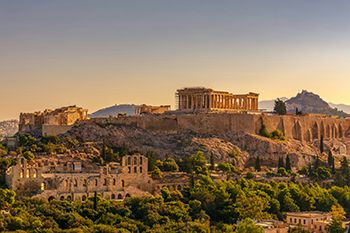
This is the rainy, quiet season. Athens averages about 13 to 14 °C (55 to 58 °F) by day, and the islands are a few degrees milder but windy and damp. Many island hotels and restaurants close for winter, and ferries run on reduced timetables. It is a good time for Athens alone: museums and the Acropolis are uncrowded, and in the winter months the Acropolis has reduced ticket prices and some free-entry Sundays.
March
Days get longer and the countryside turns green, with wildflowers on the archaeological sites. Rain is still common, and the sea is at its coldest of the year, about 16 to 17 °C (61 to 63 °F). Ferry companies publish their summer timetables in February or March, so this is the month to book island crossings for later in the year.
April
April is the first good month for sightseeing. Athens reaches about 21 °C (70 °F), and rainfall drops to about 28 mm (1.1 inches) for the month. Greek Orthodox Easter often falls on a different date from Western Easter, and it is the biggest holiday of the year, with processions on Good Friday night and celebrations on Sunday. Expect Greek visitors and higher demand that weekend. The sea is still cool, around 17 °C (63 °F).
May
May is a strong month for sightseeing: highs of about 23 °C (74 °F) on Santorini and 27 °C (80 °F) in Athens, almost no rain on the islands, and moderate crowds. The sea reaches about 19 to 20 °C (67 to 68 °F) by the end of the month, which is refreshing rather than warm. The Samaria Gorge on Crete usually opens on May 1.
June
June brings long days, warm sea and full summer service on the ferries, while the peak crowds of July have not yet arrived. Athens averages about 32 °C (89 °F), so sightseeing works best early in the day. The islands are cooler, at about 26 to 28 °C (79 to 82 °F). The meltemi can start blowing, but it is less frequent than in midsummer.
July
July is peak season. Central Athens averages about 34 °C (94 °F), with heatwaves that can push temperatures far higher, and the Acropolis can close in the hottest hours during a heatwave. The meltemi is most frequent in July and August, bringing very windy days to the Cyclades. The wind cools the islands but can delay ferries and make beaches on exposed coasts rough. Book hotels and ferries well ahead.
August
August is as hot as July, with the warmest sea of the year: about 25 °C (77 °F) around Santorini and 27 °C (81 °F) around Rhodes. The Feast of the Assumption on August 15 is a major Greek holiday, when many Greeks travel to the islands, so ferries and hotels are at their fullest around that date. For beach holidays, it is the warmest choice. For sightseeing, it is the hardest month.
September
September keeps the summer sea, with the water still at about 24 to 27 °C (76 to 80 °F), while the heat eases and the crowds thin out compared with August. Athens averages about 30 °C (85 °F). It is a strong choice for combining Athens with the islands. The meltemi still blows on some days.
October
The first half of October is warm, with highs of about 23 to 25 °C (73 to 76 °F) on the islands and a sea around 22 to 24 °C (72 to 75 °F), still swimmable for many. Rain returns gradually: Athens gets about 39 mm (1.5 inches) in October. Island services begin to wind down toward the end of the month, and the Mykonos to Santorini ferry route runs mainly until mid November. Rhodes and Crete stay warm the longest.
November and December
Rain increases, with Athens receiving about 71 mm (2.8 inches) in November and 76 mm (3.0 inches) in December. Island hotels close, and Rhodes, one of the sunniest islands, still receives about 97 to 138 mm (3.8 to 5.4 inches) of rain a month. This is a season for Athens and the mainland, with museums and food rather than beaches.
What is the meltemi, and when does it blow?
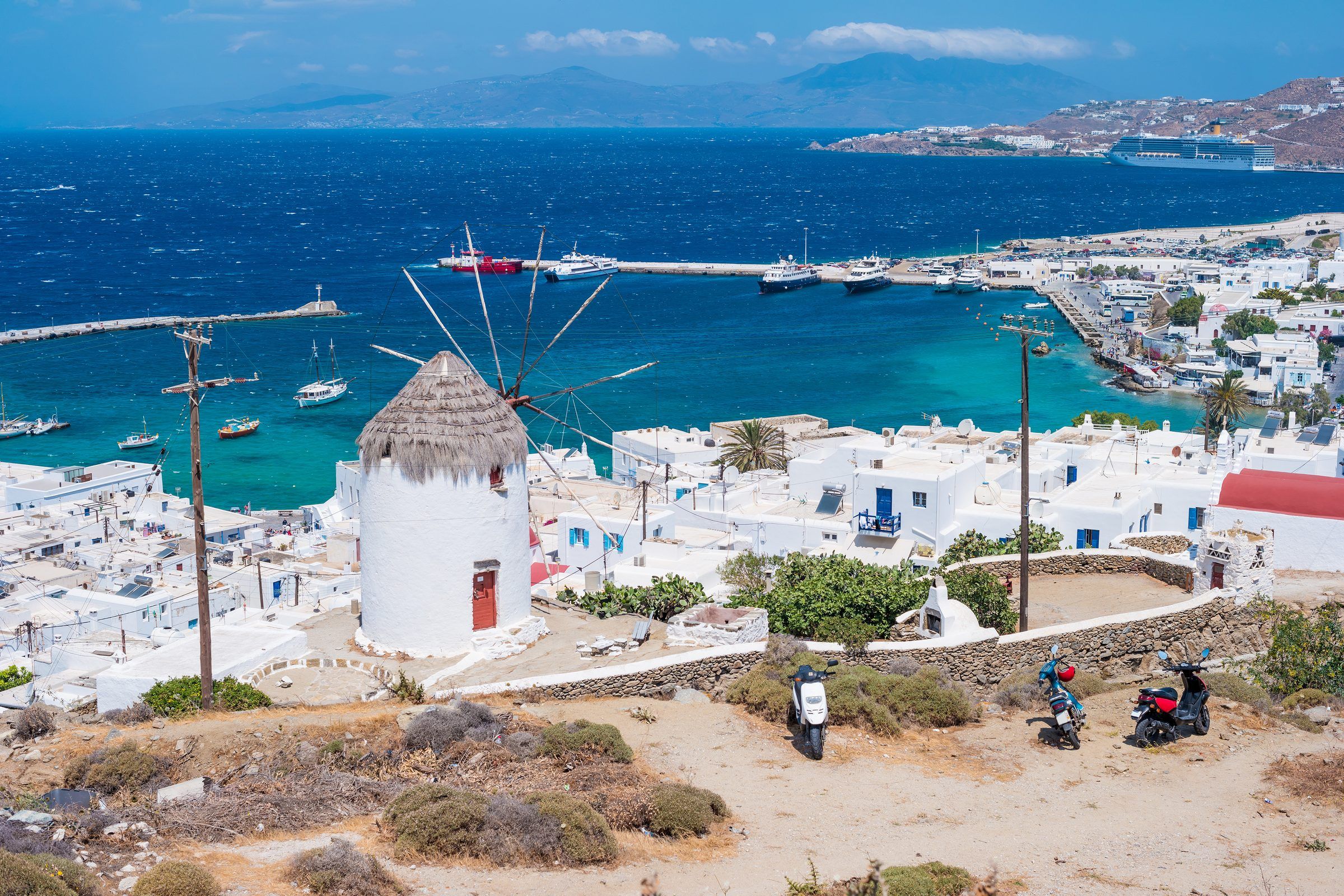
The meltemi, also called the etesian wind, is a dry north wind that can blow over the Aegean Sea from May to October. It is most frequent in July and August and strongest around the Cyclades, which includes Santorini, Mykonos, Naxos and Paros. The wind keeps summer temperatures on the Aegean islands lower than on the mainland, which makes islands like Mykonos feel cooler than Athens.
For travelers, the meltemi matters in three practical ways. Ferry crossings can be rough, and small boats and some high-speed services may be delayed or canceled. Beaches facing north can have big waves while beaches on the south side of the same island are calm. Boat trips, such as caldera cruises or the boats to the Samaria Gorge exit, can be called off on windy days. Leave a buffer day between your last ferry and your flight home.
When is the best time to visit the Greek islands?
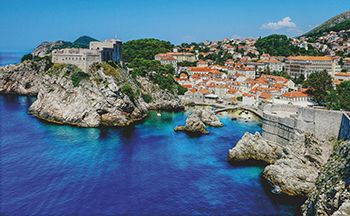
Not all islands share the same calendar. Southern islands warm up earlier and stay warm later.
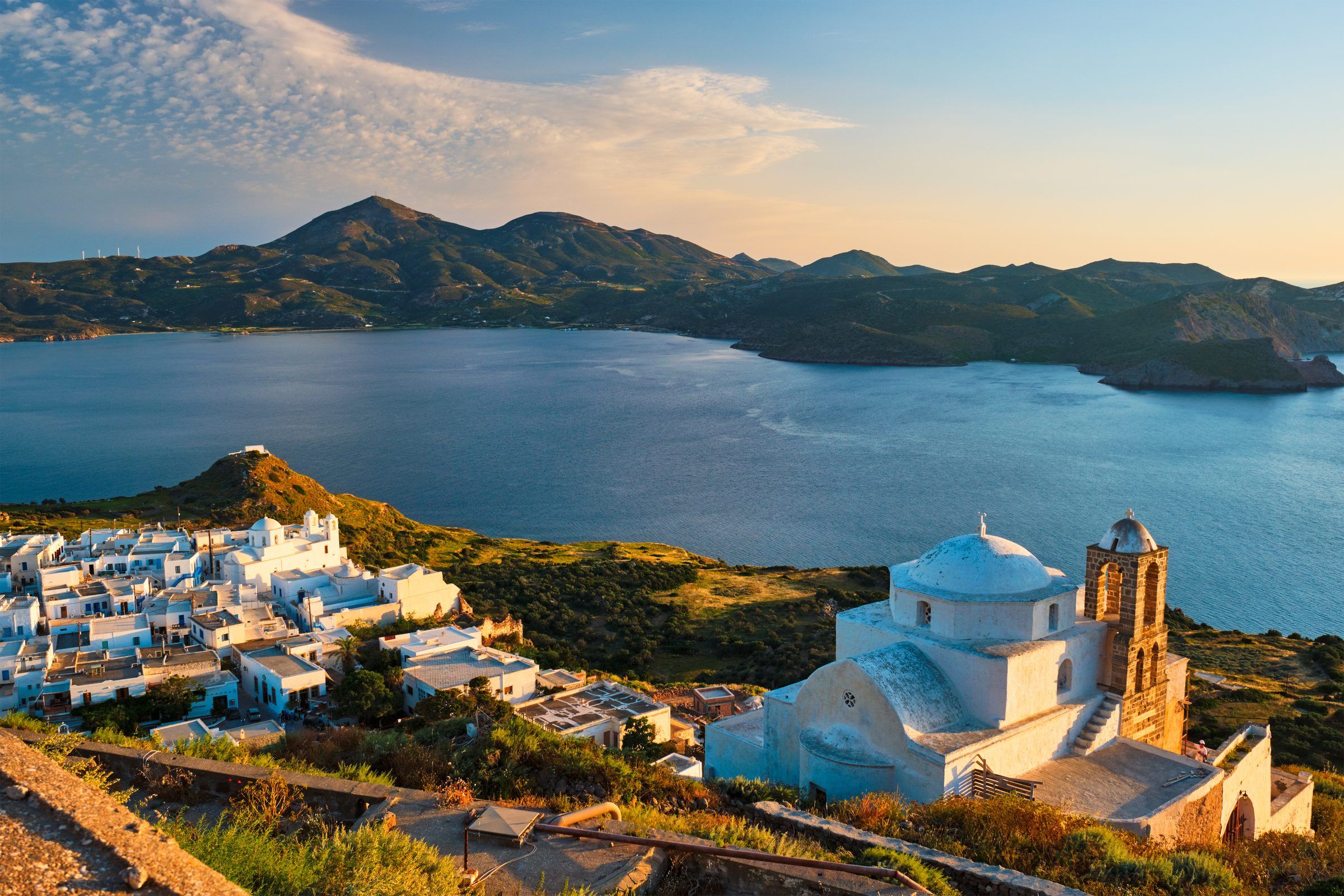
Cyclades (Santorini, Mykonos, Naxos)
Best for: late May to June and September, when the sea is warm and the wind is calmer than in midsummer.
Keep in mind: the Cyclades are the windiest island group in summer, and many hotels close from November to March.
Crete
Best for: a long season. The sea around Heraklion is still about 23 °C (74 °F) in October, and the hiking season for the Samaria Gorge runs from May to October.
Keep in mind: Crete is large, and July and August are busy along the north coast near Heraklion.
Rhodes
Best for: late season swimming. The sea is about 24 °C (75 °F) in October, and Lindos, on the east coast, is described as the warmest area in Greece by annual average temperature.
Keep in mind: Rhodes is wetter than the Cyclades in winter, with about 607 mm (24 inches) of rain a year at the airport.
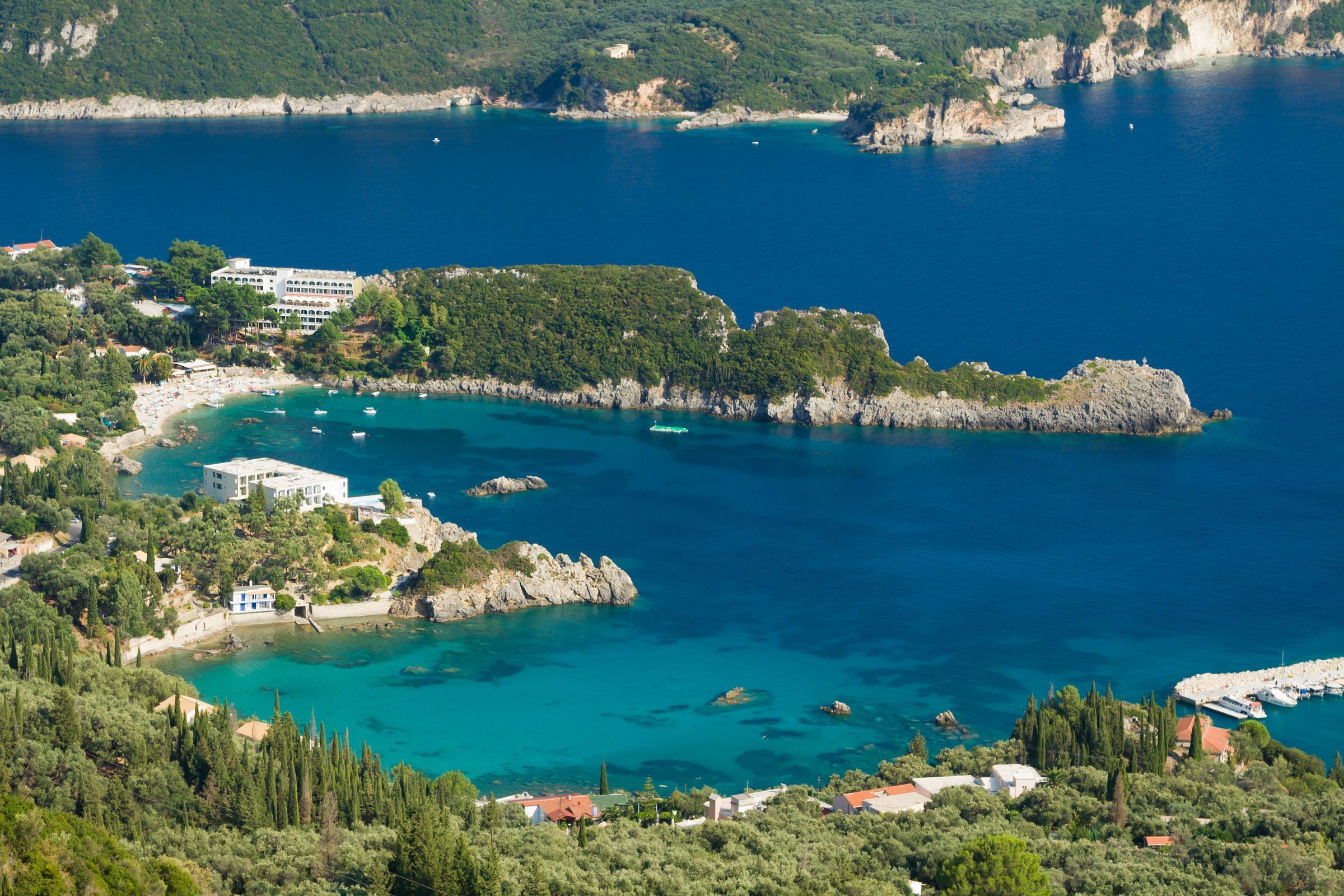
Corfu and the Ionian islands
Best for: May to October, with greener landscapes than the Aegean.
Keep in mind: Corfu receives about 1,111 mm (44 inches) of rain a year, much more than the Aegean islands, mostly in winter.
What is the best time to visit Greece to avoid crowds?
The quietest months with good weather are April, early May and the second half of October. July and August are the busiest months at the major sites, and the Acropolis is busiest from about 10 am to 2 pm all year. A few habits help at any time of year:
- Book timed tickets for the Acropolis and arrive for the first slot of the day.
- Avoid Greek holiday dates such as Orthodox Easter weekend and August 15, when Greeks travel too.
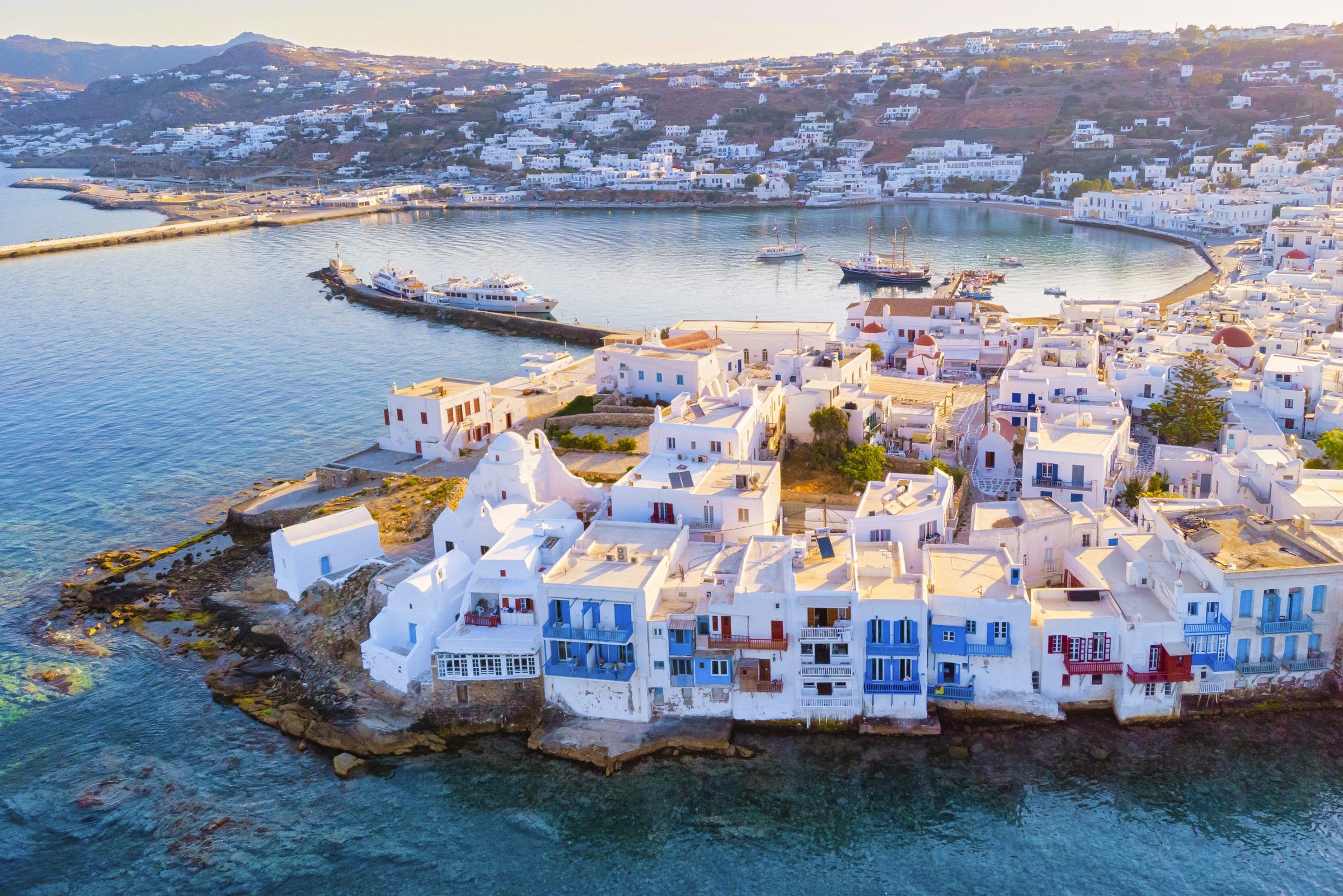
- Check the cruise schedule on Santorini and Mykonos. Cruise ships anchor off Santorini and send passengers up to Fira, so the town is busiest during the day when several ships are in port.
- Choose a quieter base. On Santorini, Imerovigli is calmer than Fira or Oia.
What is the best time to visit Greece on a cruise?
Greek island cruises sail mainly from spring to fall, when island services are open. For a cruise, the meltemi matters more than on a land trip, because wind can change tender operations at ports like Santorini, where ships anchor offshore and passengers go ashore by small boat. That makes late May, June and September the most comfortable months: warm, with the main wind season either not yet at its peak or easing off.
July and August cruises have the warmest sea but also the busiest ports and the windiest weeks. April and October cruises are quieter and cooler, and a light jacket is useful on deck in the evening.
Who this trip suits, and who it doesn't
- Heat: if heat is hard for you, avoid July and August entirely. In Athens, average highs above 30 °C (86 °F) last from June to September.
- Walking: archaeological sites have little shade, and the Acropolis marble is slippery. Spring and fall are safer and more comfortable for long walks.
- Wind and seasickness: travelers prone to seasickness should avoid island hopping in July and August, or choose large conventional ferries and domestic flights.
- Driving: a car is useful on Crete and Rhodes in any season. Roads to beaches and villages are quieter in spring and fall.
- Winter: suits city and museum travelers, not beach travelers. Many island hotels close, and ferries run less often.