




Rhodes or Crete: Which Island for Your Trip?
Rhodes or Crete, which is better? Size, beaches, old towns, ancient sites, weather and how many days each island needs, compared side by side.
November 16, 2026 • 9 min read
Rhodes or Crete: Which Island for Your Trip?
Rhodes or Crete: the side-by-side comparison
Climate figures for Rhodes come from the Hellenic National Meteorological Service station at the airport, and for Crete from the National Observatory of Athens station at Heraklion port.
Size: how much ground will you cover?
This is the biggest difference between the two. Rhodes is about 80 km (50 miles) long and 38 km (24 miles) across at its widest, shaped like a spearhead. From a hotel near Rhodes Town or on the east coast, every major sight on the island is a day trip.
Crete is about 260 km (160 miles) long. Chania to Heraklion alone is about 138 km (86 miles), roughly 2 hours by car, and Chania to Agios Nikolaos about 3 hours. Trying to see Crete from a single hotel means long days in the car. Most of the island's highlights are in the west (Chania, Balos, Elafonisi, the Samaria Gorge) or the center (Knossos, Heraklion), with the calmer east around Elounda as a third region.
Old town: which island has the better historic center?
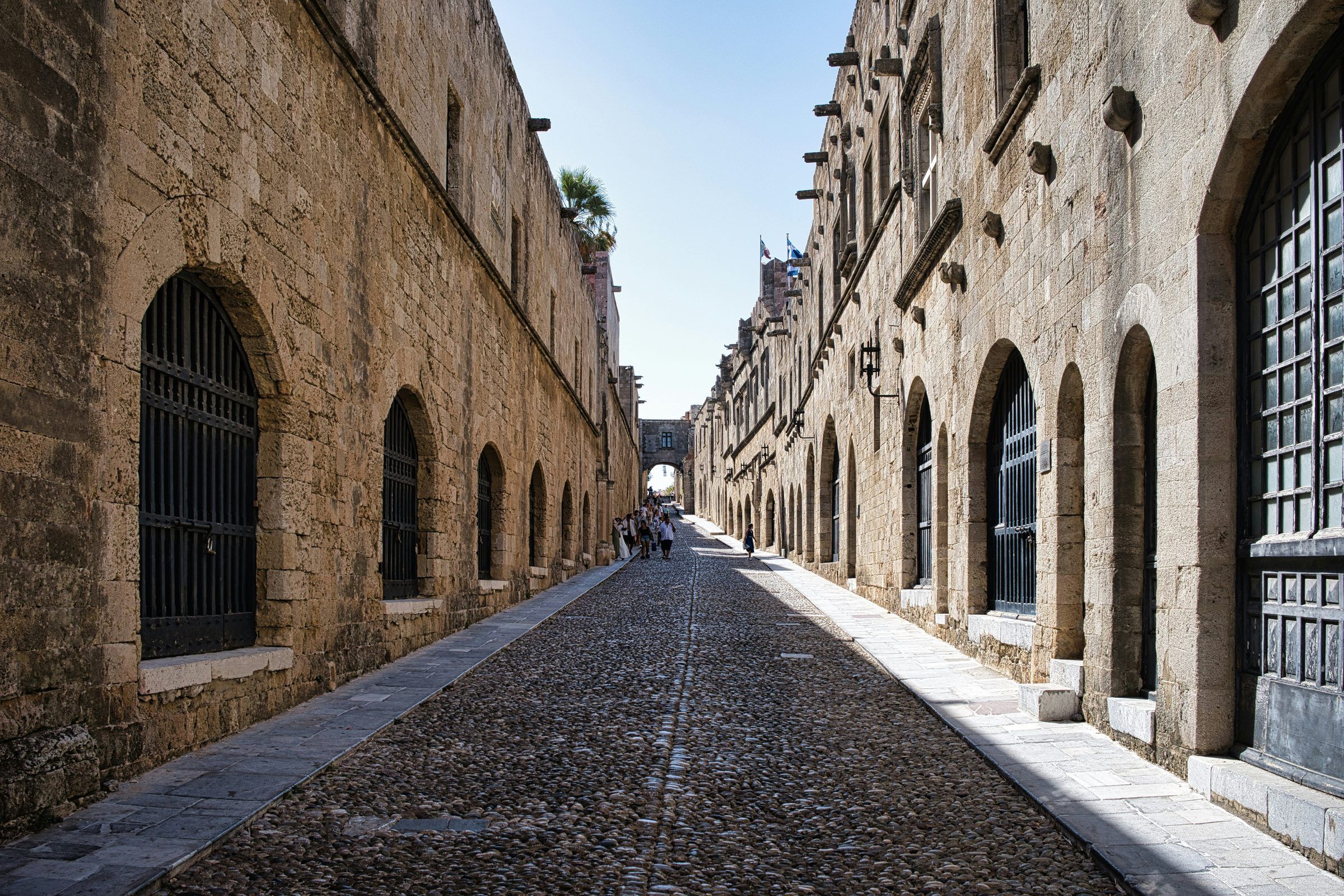
Rhodes has a clear edge if medieval history interests you. The Medieval City of Rhodes is a UNESCO World Heritage Site, and people still live inside its walls. The Knights of St. John ruled the island from 1310 to 1522, rebuilt the city, built the Palace of the Grand Master and strengthened the walls, which held off attacks in 1444 and 1480 before the city fell to Suleiman the Magnificent in 1522 after a six-month siege. The Jewish Quarter holds the Kahal Shalom Synagogue, founded in 1557 and described as the oldest synagogue in Greece.
Crete's old towns are Venetian rather than medieval. Chania wraps around a Venetian harbor with an 1864 lighthouse at its entrance, and Rethymno has one of the best-preserved old towns on Crete, with the Fortezza, the Venetian citadel, above the sea. They are smaller and more relaxed than Rhodes Old Town, with harbor-front restaurants.
Beaches: which island has better beaches?
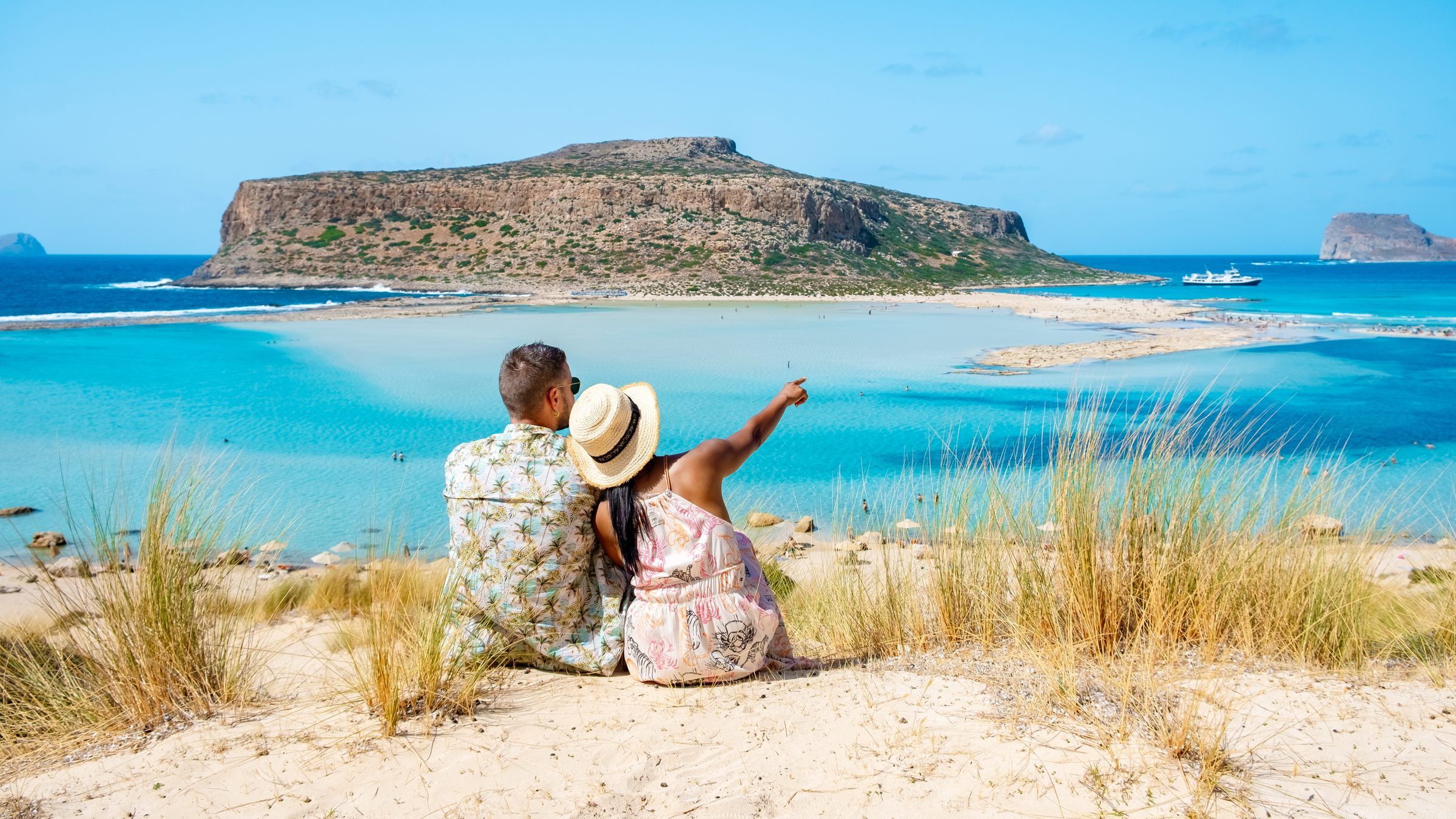
Crete offers more variety. In the west, the Balos lagoon and the protected beach at Elafonisi are famous for their shallow, turquoise water. The north coast near Heraklion and Rethymno has long sandy resort beaches, and the south coast has small coves reached by mountain roads or boat. The trade-off is driving: Elafonisi is about 75 km (47 miles) from Chania on slow roads.
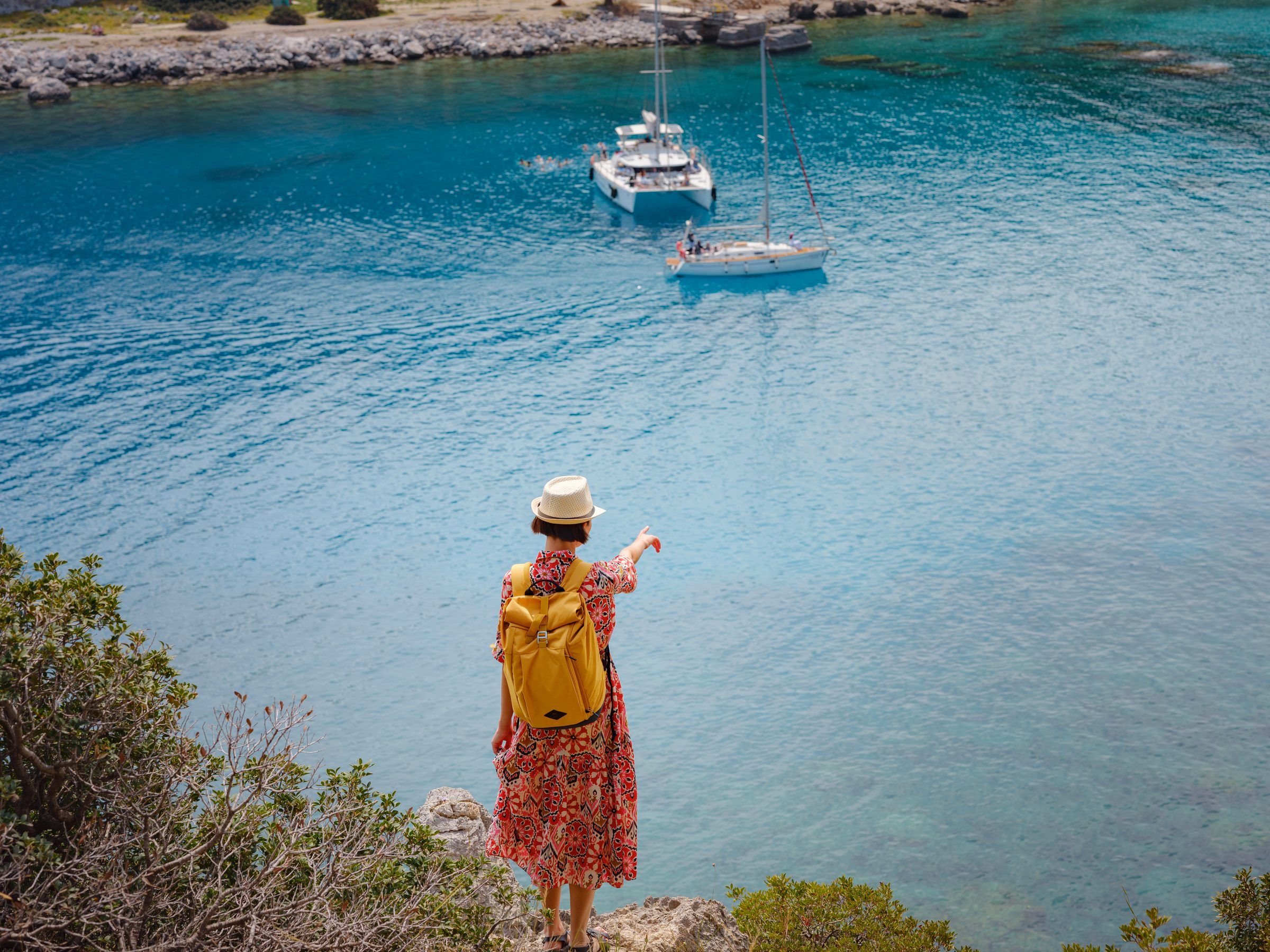
Rhodes has two distinct coasts. The east coast is sheltered from the summer north wind, with sandy beaches and calm water: Tsambika is wide and shallow, Anthony Quinn Bay is a small cove good for snorkeling, and St. Paul's Bay below Lindos is a nearly enclosed bay. The west coast faces the wind, with shingle beaches and choppy water popular with windsurfers. At Prasonisi, on the southern tip, a sandbar separates rough water on one side from flat water on the other, which makes it a kitesurfing and windsurfing center.
In short: Crete for scenery and variety, Rhodes for easy, calm beach days close to your hotel.
Ancient sites: Knossos or Lindos?
Crete is the home of the Minoan civilization. Knossos, just outside Heraklion, is part of the Minoan Palatial Centres of Crete, added to the UNESCO World Heritage List in 2025 along with Phaistos, Malia, Zakros, Zominthos and Kydonia. Phaistos, on the south side of the island, is a second major site, and the archaeology museum in Heraklion completes the picture.
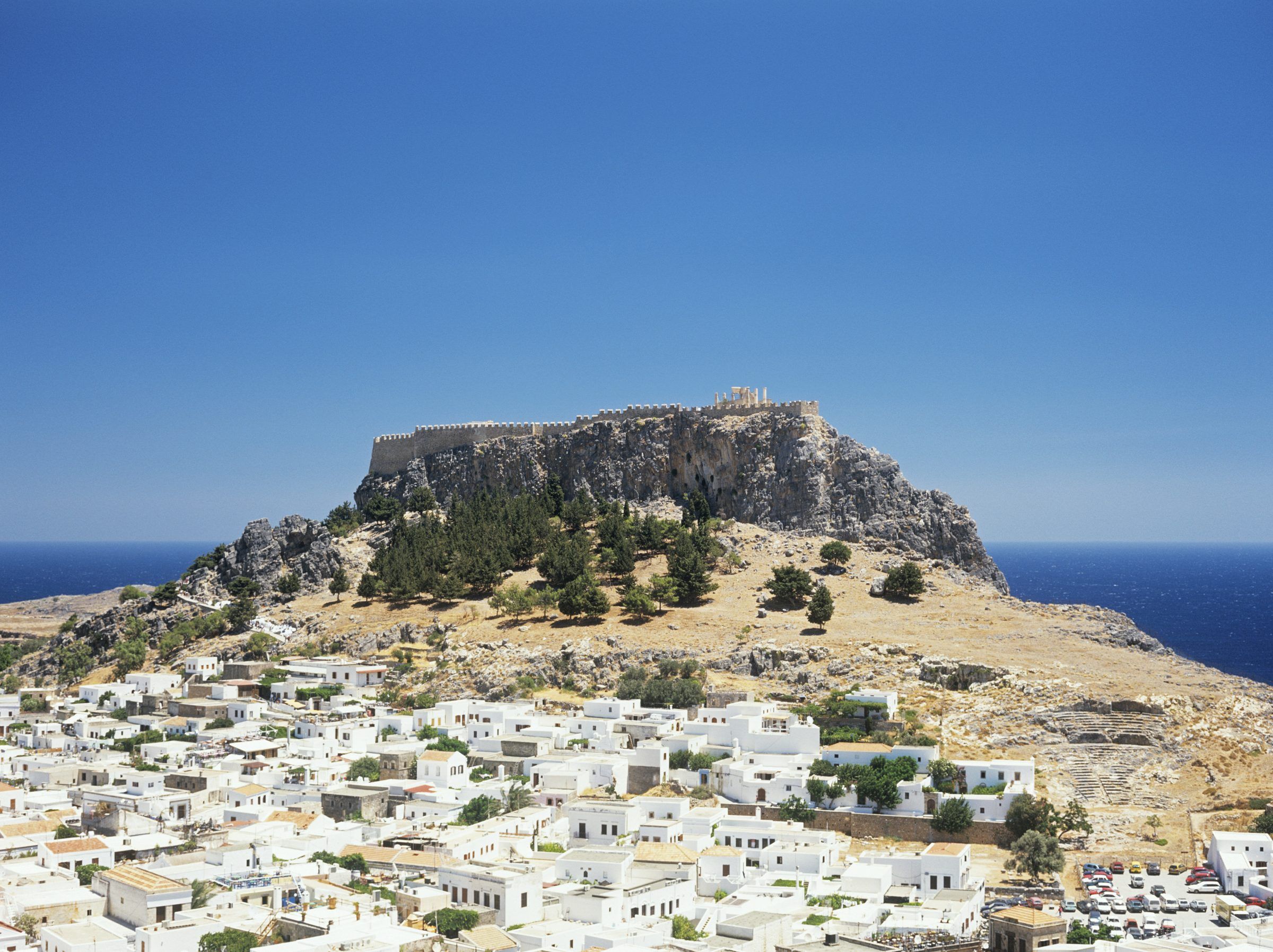
Rhodes has the Acropolis of Lindos, which sits on a rock above the village of Lindos on the east coast, with views over St. Paul's Bay. The climb up is steep and exposed to the sun. Ancient Kamiros, on the west coast, is a second site. Rhodes Old Town itself, with its walls and the Palace of the Grand Master, is the island's main historic draw.
Weather: which island is warmer?
Both islands are warm from May to October. Rhodes is slightly hotter in midsummer, with average highs of about 31 °C (87 °F) in July and August at the airport, against about 28 °C (83 °F) at Heraklion port. Lindos is described as the warmest area in Greece, with a mean annual temperature of about 22 °C (72 °F). Rhodes also gets a lot of sun, with more than 3,000 recorded hours of sunshine a year.
In winter, Rhodes is wetter: about 607 mm (24 inches) of rain a year at the airport, most of it from November to February, against about 319 mm (13 inches) at Heraklion port. Both seas stay warm well into October, around 24 °C (75 °F) off Rhodes and 23 °C (74 °F) off Heraklion.
How many days do you need in Rhodes or Crete?
Where to stay on each island
Rhodes Town
Best for: walking into the Old Town in the evening, restaurants and the main bus station.
Keep in mind: the beaches near town, such as Ixia, are on the windy west side, and the Old Town is busy in summer.
Lindos and the east coast
Best for: calm beaches, the acropolis on your doorstep and resort hotels.
Keep in mind: Lindos village has steep, narrow lanes, and it is a longer trip to Rhodes Old Town for dinner.
Chania (Crete)
Best for: the Venetian harbor, the west coast beaches and the Samaria Gorge.
Keep in mind: Knossos and the east are 2 or more hours away.
Heraklion and the north coast (Crete)
Best for: Knossos, short airport transfers and all-inclusive resorts along the coast to the east.
Keep in mind: the resort coast is busy in July and August and less scenic than the west.
Butterfly Valley, or Petaloudes, is a wooded valley in the interior of Rhodes where large numbers of tiger moths gather in summer.
Who this trip suits, and who it doesn't
- Rhodes suits travelers who want to unpack once, walk a medieval town and swim in calm water. It suits travelers who prefer short drives or no driving at all, since buses run between Rhodes Town and the east coast resorts.
- Crete suits confident drivers who enjoy variety and do not mind changing hotels. It is less suited to anyone who dislikes winding mountain roads.
- Walking: Rhodes Old Town has cobbled lanes, and the Acropolis of Lindos is a steep climb in full sun. On Crete, Knossos is uneven ground, and the Samaria Gorge is a 6 to 7-hour hike of about 16 km (10 miles).
- Heat: both islands are hot in July and August, Rhodes slightly more so. Visit sites in the morning.