
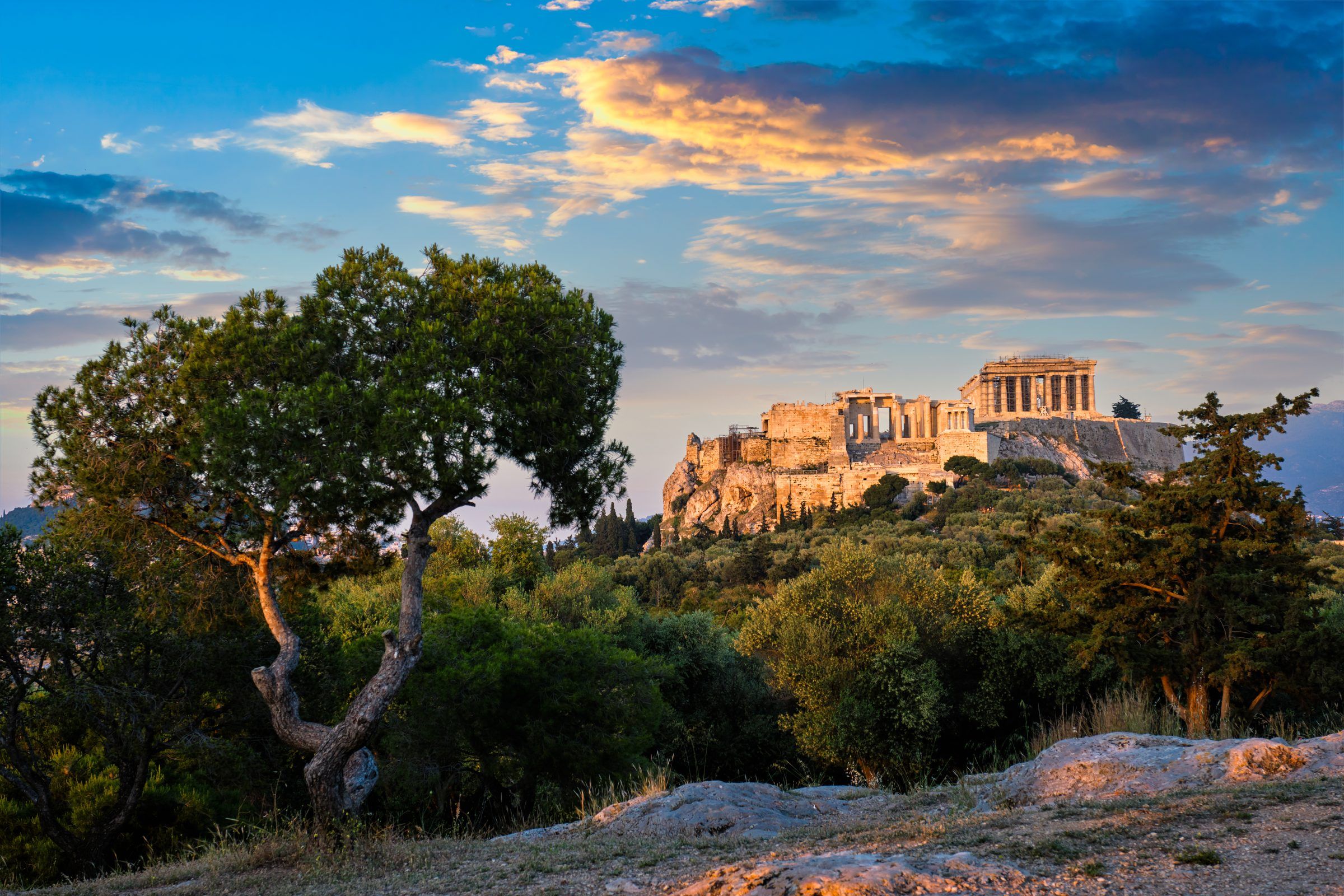
Greece Itinerary 10 Days: Athens and Two Islands
A calm 10-day Greece itinerary: 3 nights in Athens, then Naxos and Santorini by ferry, day by day. Plus 7-day and 14-day versions.
November 16, 2026 • 13 min read
Greece Itinerary 10 Days: Athens and Two Islands
How should you split 10 days in Greece?
The simplest rule is one city plus two islands, with at least 3 nights in each place. Every move between places costs you about half a day once you count hotel checkout, the transfer to the port and the crossing itself. Three nights gives you two full days in each base.
Athens comes first because international flights from the U.S. and Canada land there, and a city with museums and cafés is an easier place to deal with jet lag than a ferry deck. The islands come second, when your body clock has settled. You end on Santorini and fly back to Athens on the last morning, which avoids a long ferry ride on the day of your flight home.
Naxos and Santorini make a good pair because they are different from each other. Naxos is the largest island in the Cyclades, at about 430 km² (166 sq mi), with farmland, mountain villages and sandy beaches close to its main town. Santorini is a volcanic island whose inner coast rises in cliffs more than 300 m (980 ft) high, with the villages built along the top.
Days 1 to 3: How many days do you need in Athens?
Three nights in Athens covers the main ancient sites without rushing, with one evening left for a trip out of the city. Two nights is the minimum if you want to see both the Acropolis and the Acropolis Museum, which work best on separate days.

Day 1: Arrival and Plaka
Flights from North America usually land in the morning or early afternoon. Keep the first day light: check in, rest, and walk the streets of Plaka below the Acropolis in the evening, when the stone has cooled down.
Day 2: The Acropolis and the Ancient Agora
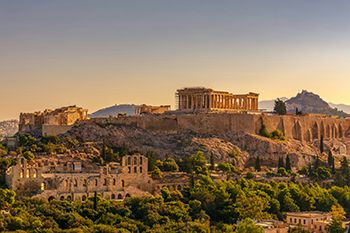
Entry to the Acropolis works with timed tickets, and booking a slot through the official ticket website ahead of time is strongly advised in the warmer months. The site is busiest from about 10 am to 2 pm, so take the first slot of the day. Plan 2 to 3 hours on the hill. The marble paths are polished by centuries of feet and can be slippery, so wear shoes with good grip.
In summer heatwaves, the site can close during the hottest hours. Check the official ticket website the day before your visit. Spend the afternoon at the Ancient Agora below, where the walking is flatter and there is more shade.
Day 3: Acropolis Museum and Cape Sounion
The Acropolis Museum sits at the foot of the hill and holds more than 3,000 artifacts from the site. A morning there leaves the afternoon free. In the afternoon, take a tour or a taxi to the Temple of Poseidon at Cape Sounion, built between 444 and 440 BC at the southern tip of Attica. The site stays open until sunset, which is the reason to go late in the day.
Best for: first-time visitors who want the ancient sites, good museums and a lively food scene before the islands.
Keep in mind: from June to August, afternoon highs in central Athens average around 32 to 34 °C (90 to 94 °F). Plan sightseeing for early morning and evening.
Days 4 to 6: Why Naxos for the first island?
Day 4: Ferry from Piraeus to Naxos
Ferries leave from the port of Piraeus, on the coast southwest of central Athens. Allow plenty of time for city traffic on the way. High-speed boats reach Naxos in about 3.5 hours, and conventional ferries take about 4 to 5.5 hours. The conventional ships are larger and move less in the wind, which matters if you get seasick. Arrive at the port at least an hour before departure, because Piraeus is large and each company uses its own gate.
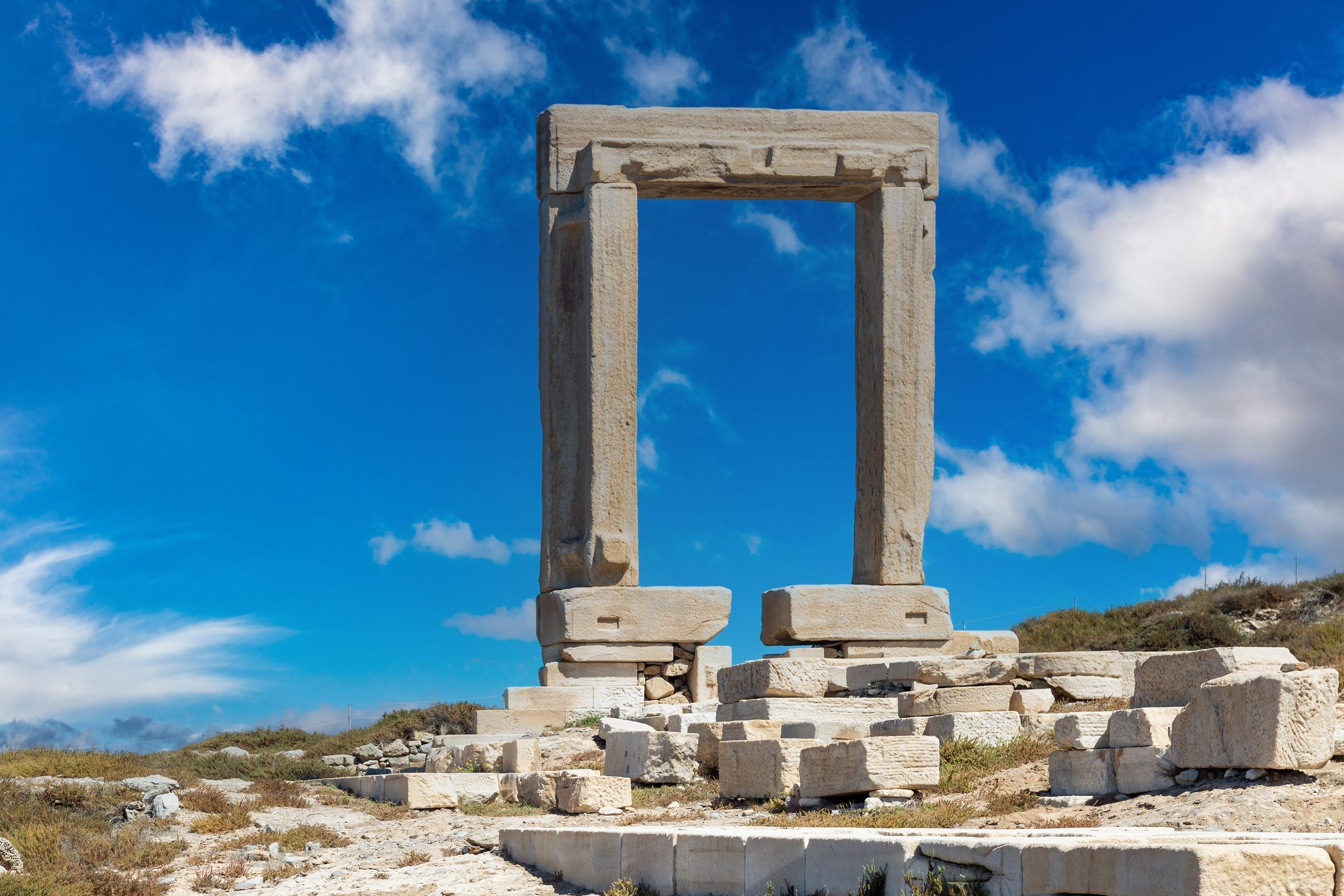
Naxos Chora, the main town, sits right at the port. In the evening, walk out to the Portara, the ancient marble gateway on the small Palatia peninsula next to the harbor, which is the classic sunset spot in town.
Day 5: West coast beaches
The best-known beaches on Naxos lie on the west coast, a short drive or bus ride south of Chora: Agios Prokopios, Agia Anna and Plaka. They are long and sandy, with shallow entry into the water. Agia Anna has a row of tavernas on the sand, which makes it an easy choice for a long lunch.
Day 6: Mountain villages and local food
The interior of Naxos rises to Mount Zeus, at 1,001 m (3,284 ft). The mountain villages make a relaxed half-day drive, with stops for coffee in a village square. Naxos is a farming island, known for its potatoes, its Arseniko cheese and Kitron, a local citrus liqueur.
Best for: travelers who want sandy beaches, good food and a quieter base between Athens and Santorini.
Keep in mind: Naxos has fewer dramatic views than Santorini, and the villages are spread out, so you will want a car or a tour to see the interior.
Days 7 to 9: What to do on Santorini in 3 days
Day 7: Ferry to Santorini
Naxos and Santorini are connected all year, with up to 8 crossings a day in summer. Fast catamarans take about 1 hour, and conventional ferries about 2 hours. Boats arrive at Athinios, the ferry port on the inside of the caldera, where buses, taxis and hotel transfers take you up the cliff road to Fira or Oia.
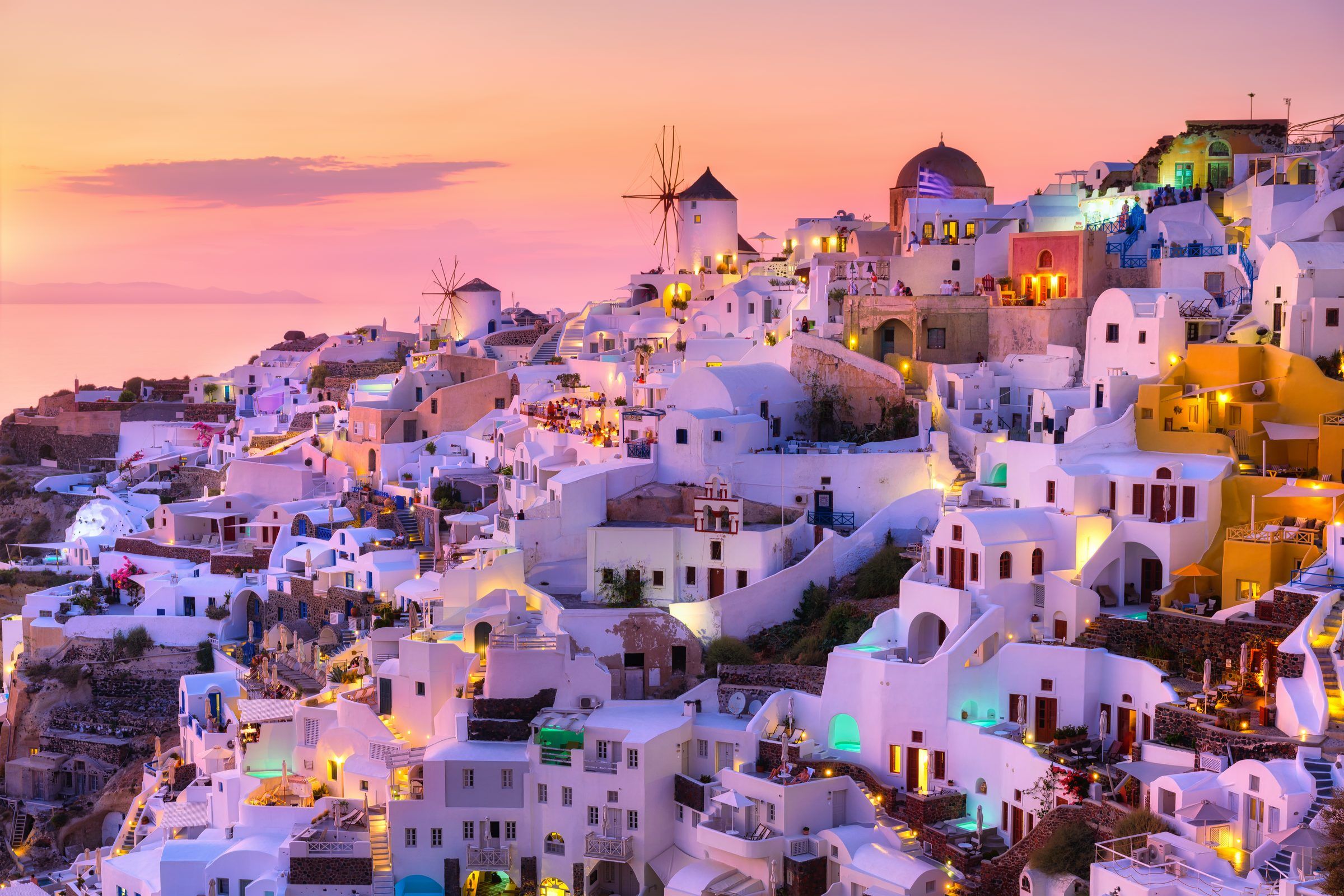
Day 8: Fira to Oia caldera walk
The path along the caldera rim from Fira to Oia is about 10 km (6 miles) and takes 3 to 5 hours with stops. Walking in that direction is mostly downhill and ends in Oia in time for sunset. The trail mixes paved village lanes with rocky dirt sections and one steady climb near Profitis Ilias, and there is almost no shade. Start early in summer and carry water. If the full walk is too much, take the section from Fira to Imerovigli, which is short and paved.
Day 9: Akrotiri and the volcanic beaches
Akrotiri is a Bronze Age town buried by a volcanic eruption, with multi-level buildings and wall paintings, often compared to Pompeii. The excavated area sits under a protective canopy, so it is a good choice for a hot day. Red Beach is close by. Santorini's beaches have dark volcanic sand or pebbles, which absorb the sun and make the water feel warmer, but the sand gets very hot by midday.
Best for: caldera views, sunsets, wine tasting and a once-in-a-trip hotel with a view.
Keep in mind: the cliff villages are full of steps, and many caldera hotels are reached only by staircases. Oia is very crowded at sunset in summer.
Day 10: Fly back to Athens
Flights from Santorini to Athens take about 45 minutes and run all year. Book a flight that lands in Athens with plenty of time before your international departure, or spend a last night near Athens airport if your flight home leaves early in the morning. The ferry back to Piraeus takes about 5 to 8 hours, too long for a departure day.
How do ferries work between Athens and the islands?
Two kinds of boats serve the Cyclades. High-speed catamarans are faster but have assigned seats indoors and move more in rough sea. Conventional ferries are slower, carry cars and have open decks, cafés and sometimes cabins. Companies publish their summer timetables in February or March, so book your sailings once they appear.
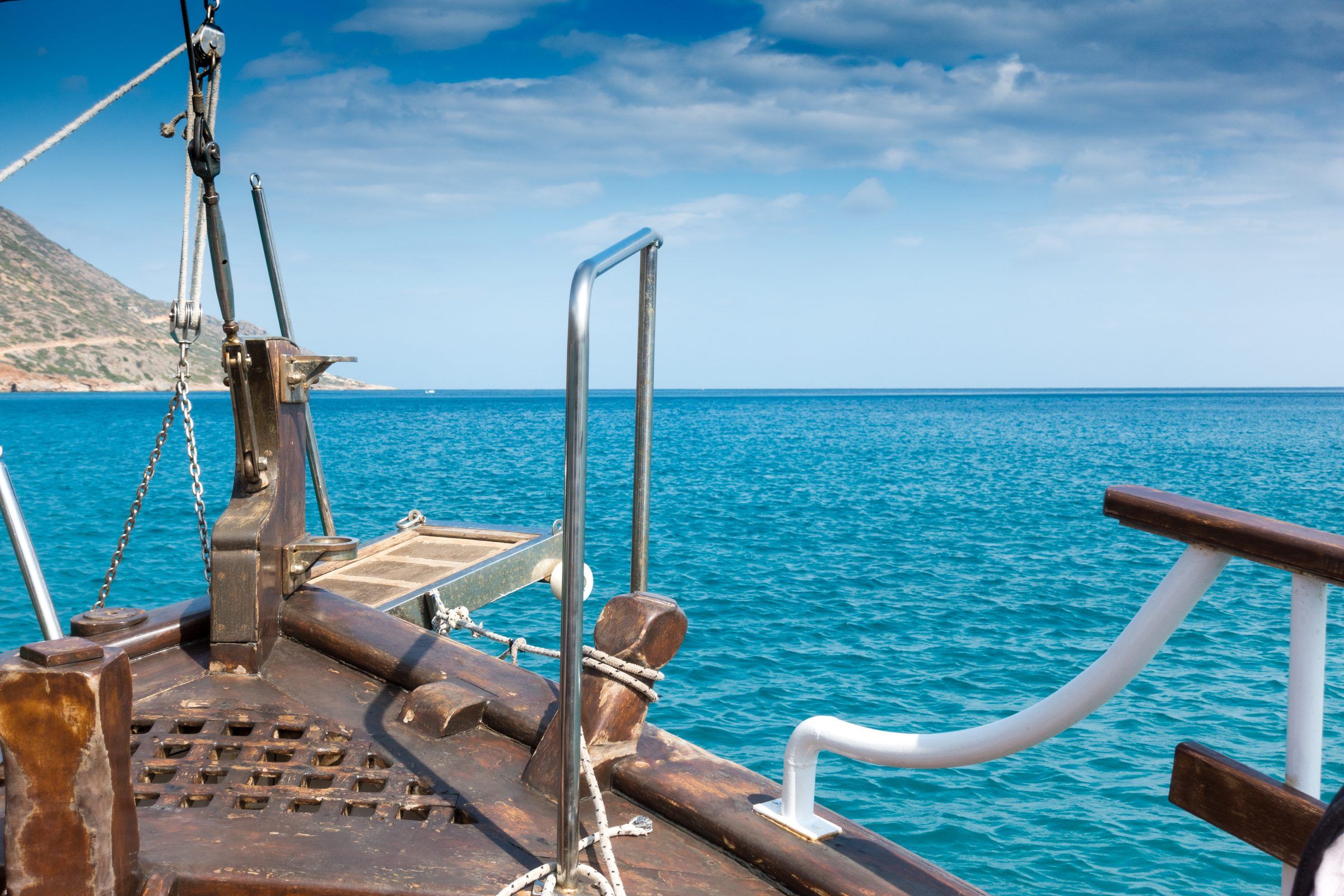
The meltemi, a dry north wind, can blow in the Aegean from May to October and is most frequent in July and August. On windy days, crossings can be rough, and smaller boats are sometimes delayed or canceled. Avoid planning a ferry for the same day as your flight home.
Can you swap the islands?
Yes. The structure stays the same, and only the ferry legs change.
Mykonos instead of Naxos
Mykonos is about 3 hours from Piraeus by fast boat, and the town has the windmills, Little Venice and a strong nightlife scene. Boats run to the ancient island of Delos, about 2 km away. Ferries between Mykonos and Santorini run mainly from late March to mid November.
Best for: travelers who want bars, beach clubs and a stylish town after dark.
Keep in mind: Mykonos is known as the island of the winds, and it is busier and more party-focused than Naxos in July and August.
Corfu instead of the Cyclades
Corfu lies in the Ionian Sea on the other side of Greece, so it does not combine with Santorini by ferry. It works as a single island paired with Athens by a short flight. The Old Town of Corfu is a UNESCO World Heritage Site with Venetian and British buildings, and the island is green with olive groves.
Best for: travelers who prefer green landscapes, shaded old streets and a single island base.
Keep in mind: Corfu gets far more rain than the Cyclades in winter, about 1,111 mm (44 inches) a year, so it is a late spring to early fall destination.
Greece itinerary 7 days: the shorter version
With 7 days, drop one island and keep the pace calm:
- Days 1 to 3: Athens, as in the plan above.
- Day 4: Fly or take the ferry to Santorini (about 45 minutes by air or 5 to 7.5 hours by sea).
- Days 5 and 6: Fira to Oia walk, Akrotiri, a caldera boat trip.
- Day 7: Fly to Athens and connect to your flight home.
If you prefer beaches and quiet evenings to the caldera, use Naxos instead of Santorini, but keep in mind that the ferry from Piraeus takes about 3.5 to 5.5 hours and the flight about 40 minutes, so check connections to Athens for your last day.
Greece itinerary 14 days: the longer version
Two weeks gives you room for either the mainland or a third island.
Option 1, mainland plus islands: start with 6 or 7 days driving from Athens through the Peloponnese and central Greece: Nafplio, Mycenae, Olympia, Delphi and the monasteries of Meteora. Mycenae, Olympia, Delphi and Meteora are all UNESCO World Heritage Sites. Return the car in Athens and finish with 6 nights split between Naxos and Santorini.
Option 2, three islands: follow the 10-day plan, then take the ferry from Santorini to Heraklion on Crete (about 1.5 to 3 hours). Spend 4 nights on Crete for Knossos, the Venetian harbors of Rethymno and Chania, and fly home through Athens from Heraklion or Chania.
Best for (Crete): a third island with sandy beaches, Minoan sites and food, reached without going back to Athens.
Keep in mind: Crete is about 260 km (160 miles) long, so in 4 nights pick one region and rent a car.
Who this trip suits, and who it doesn't
It suits you if you can walk 2 to 3 hours on uneven ground, carry or roll a suitcase on and off a ferry, and enjoy changing bases every 3 days.
Think twice if:
- Stairs are a problem. The Acropolis has a steep path, and Santorini's caldera villages are built on staircases. Ask for a hotel with no steps to the room, or choose a base away from the cliff edge.
- You struggle in heat. July and August bring highs around 34 °C (94 °F) in Athens. Late spring and September are much easier.
- You get seasick. Choose conventional ferries over catamarans, or replace the Piraeus to Naxos leg with a flight to Naxos (about 40 minutes).
- You want to drive. Driving in central Athens is stressful and not needed. A car is useful on Naxos and on Crete only.
If you prefer one hotel for the whole week, a single island such as Crete or Rhodes with a rental car suits you better than island hopping.